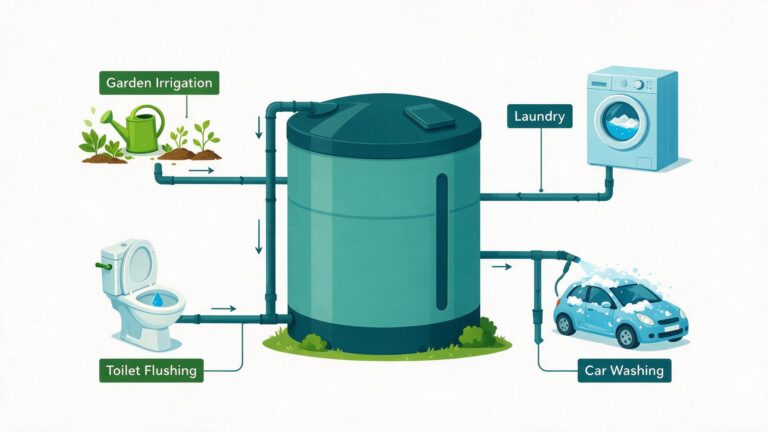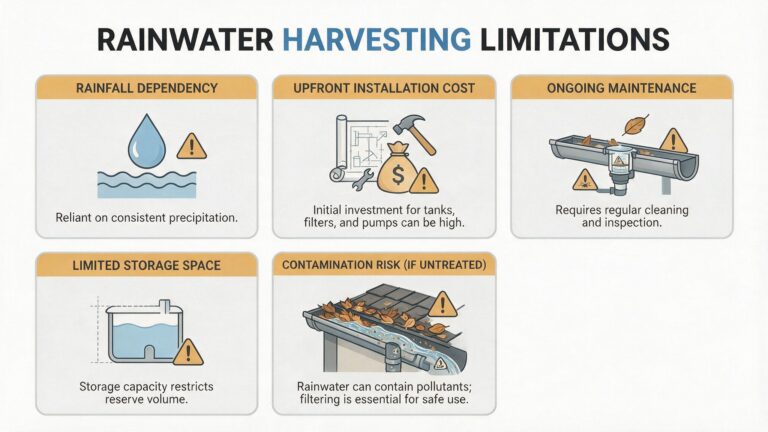
It’s easy to treat rainwater harvesting as a nice-to-have — a good habit rather than something that actually matters. The numbers behind India’s groundwater situation say otherwise. According to the Ministry of Jal Shakti’s 2025 Dynamic Groundwater Resources Assessment, national groundwater extraction stands at 60.63% of what’s available, and within Maharashtra specifically, several talukas are already classified as Over-Exploited or Critical. That’s the backdrop rainwater harvesting actually operates against — not an abstract sustainability talking point, a measurable resource under real pressure.
Why It Matters at the Groundwater Level
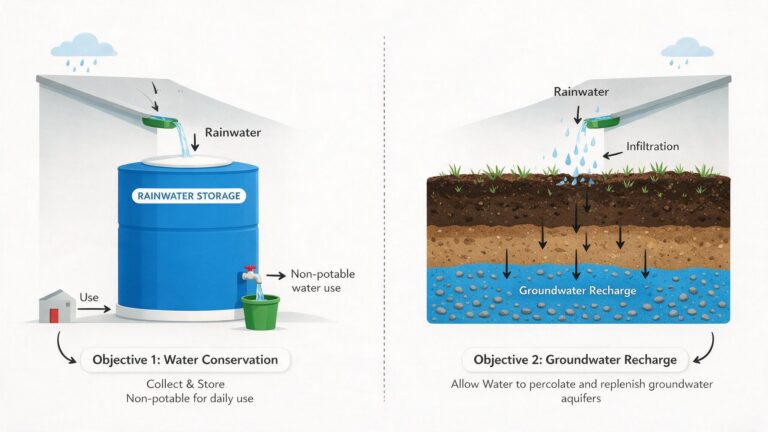
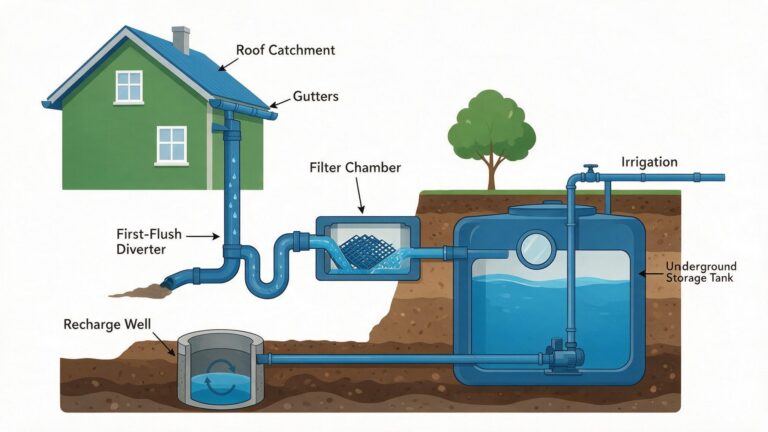
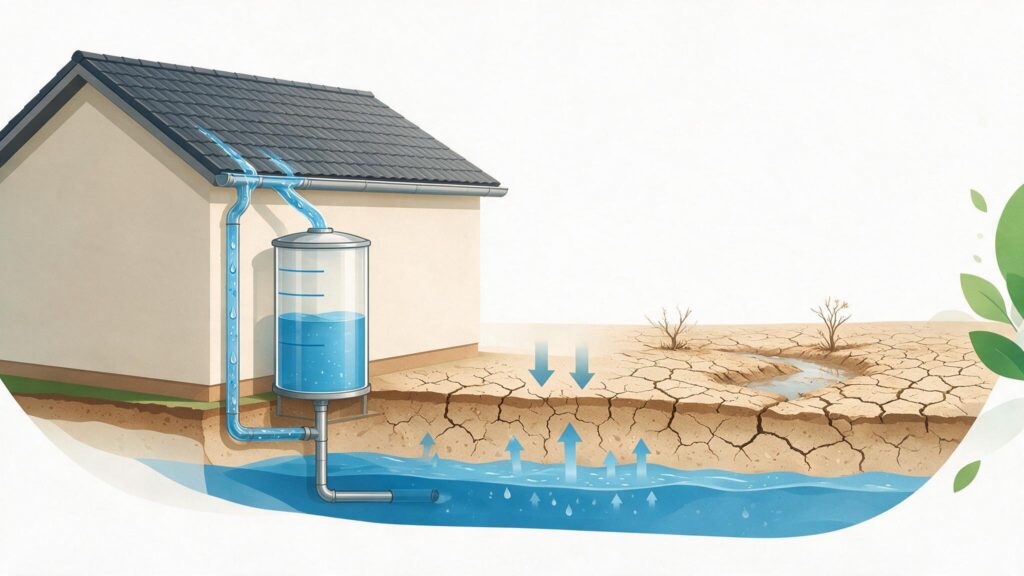
Every borewell draws water out of an aquifer that recharges naturally through rainfall soaking into permeable ground — open fields, forests, unpaved land. As cities expand, concrete and asphalt replace that permeable ground, which means less rain reaches the aquifer naturally even as extraction from borewells continues or increases. Rainwater harvesting exists specifically to counteract that gap: recharge structures replicate, artificially, the natural recharge that urbanization has paved over.
Why It Matters at the Property Level
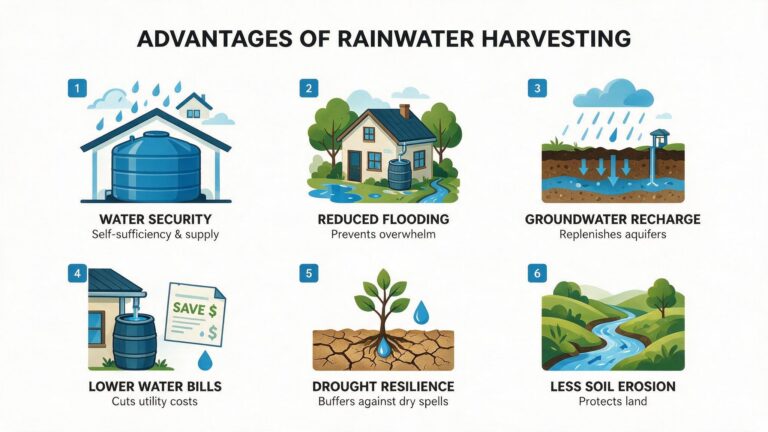
Beyond the regional picture, rainwater harvesting matters directly to whoever owns or manages a property. A borewell drawing from a recharge-supported aquifer holds its yield better over time. A household with stored rainwater has a buffer during municipal supply cuts. And in most of urban Maharashtra above a certain plot size, a compliant system is what keeps a building plan approved and a water connection active in the first place — see our guide on whether rainwater harvesting is mandatory in Nagpur for the specific thresholds that apply.
Why It Matters at the Civic Level
Widespread rainwater harvesting across a neighbourhood or city has effects that go beyond any individual property: reduced surface runoff during heavy rainfall means less strain on stormwater drainage and less localized flooding, and collectively recharged groundwater supports the water table that every borewell in the area, not just the one that installed the system, ultimately draws from.
The Honest Scope of the Benefit
Rainwater harvesting is not a complete solution to groundwater depletion on its own — it’s one lever among several, alongside reduced extraction, watershed management, and surface water infrastructure. What it does well is address the specific gap between reduced natural recharge and continued extraction at the level an individual property or building actually controls, which is meaningful even though it isn’t the entire answer. For the specific ways it delivers that value, see our guide to the 10 advantages of rainwater harvesting.
Frequently Asked Questions
Does rainwater harvesting matter more in some parts of India than others?
The urgency varies with local groundwater status — areas classified as Over-Exploited or Critical by CGWA see a more immediate practical benefit from recharge-focused systems, though the underlying value applies broadly across urban India.
Is the importance of rainwater harvesting mainly environmental, or does it have a practical case too?
Both, and they’re connected rather than separate — environmental groundwater health and a property owner’s practical water security are two views of the same underlying resource.
How does rainwater harvesting compare to other groundwater conservation measures?
It’s one of the few measures an individual property owner can implement directly, rather than depending on broader policy or infrastructure change, which is part of why it’s the measure most commonly mandated at the building level.