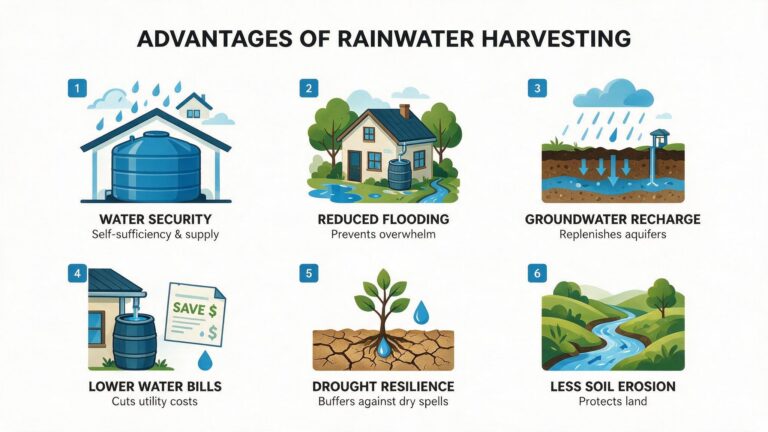
Strip rainwater harvesting down to its purpose and it comes down to two goals. Every specific benefit — lower water bills, reduced flooding, better borewell yield — is really just a downstream effect of one of these two core objectives being met.
Objective 1: Water Conservation for Direct Use
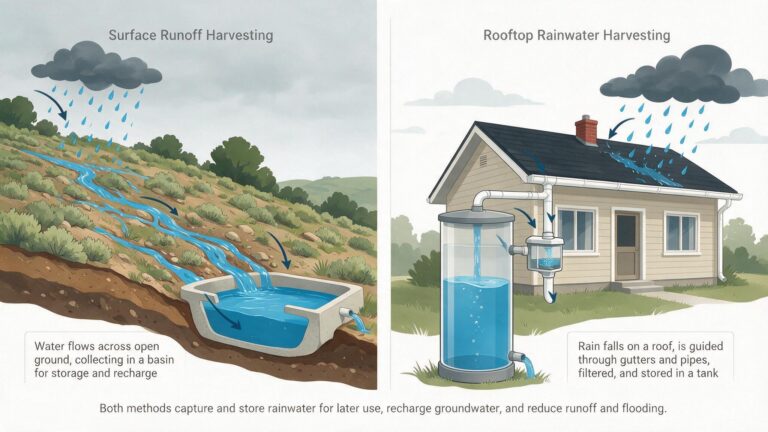
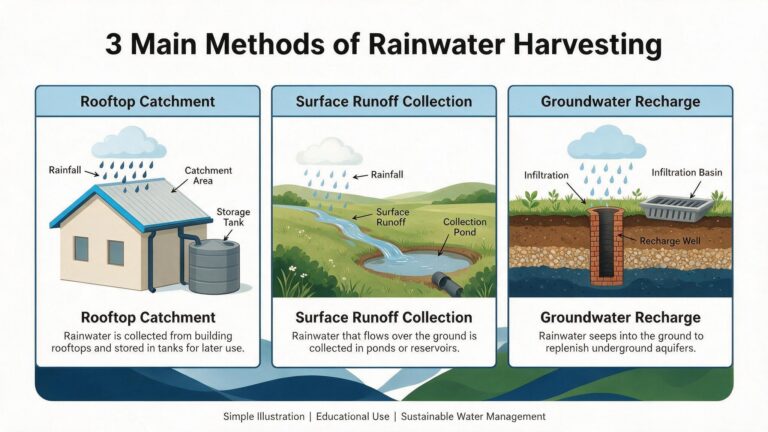
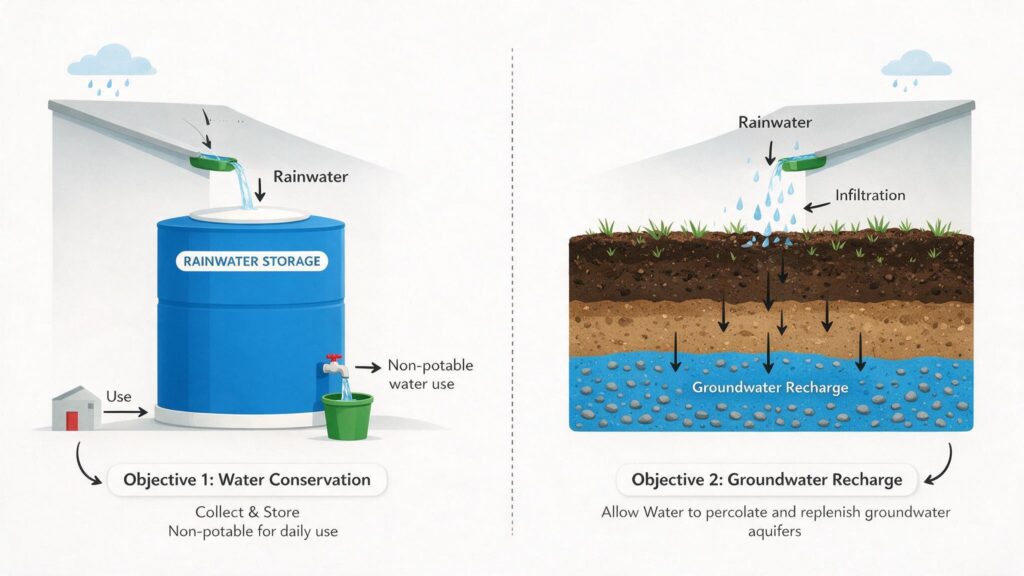
The first objective is straightforward: capture rain before it’s lost to runoff, and store it for use — washing, gardening, flushing, and in some cases drinking water after appropriate treatment. This objective is met through rooftop catchment feeding a storage tank sized to the property’s harvesting potential and actual water needs. It’s the objective most directly visible to a household, since it shows up as water actually available to use, and often as a lower water bill or reduced tanker dependency over a monsoon season.
Objective 2: Groundwater Recharge
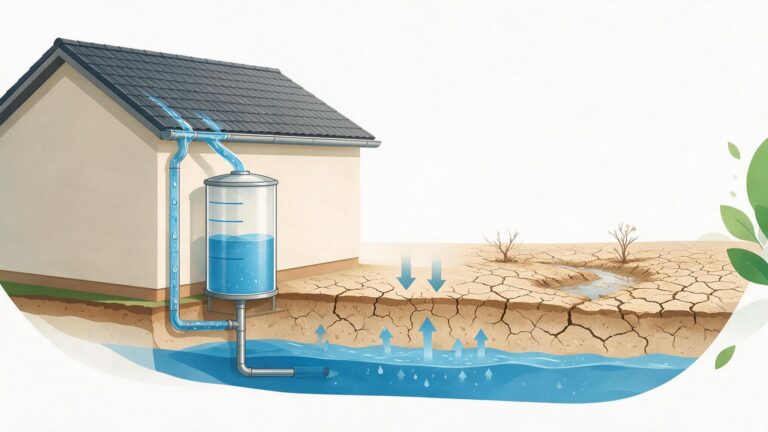
The second objective looks past the individual property to the aquifer beneath it. Rather than storing water for use, the goal here is to return it to the ground — through a recharge pit, trench, or well — so that groundwater levels are replenished rather than steadily drawn down by extraction with no offsetting recharge. This is the objective municipal rainwater harvesting byelaws are almost always built around, because it addresses a shared resource rather than one property’s water bill.
How the Two Objectives Relate
These aren’t competing goals — most well-designed systems pursue both at once. Rooftop catchment feeds a storage tank sized for the household’s realistic needs (Objective 1), and the overflow, once the tank is full, is directed to a recharge structure (Objective 2). A property with modest water needs but strong catchment area might lean almost entirely toward Objective 2, sending most or all harvested water to recharge; a property with high water demand and limited open space for a recharge structure might lean more heavily toward Objective 1. Working out that balance is exactly what the site assessment step in the rainwater harvesting process is for.
Why This Two-Objective Framing Is Useful
Understanding these as two distinct objectives, rather than one vague goal of “saving water,” helps clarify a design decision that otherwise feels arbitrary: whether a system should prioritize a larger storage tank or a more capable recharge structure. That choice should follow directly from which objective matters more for a given property — not from whichever component happens to be easier or cheaper to install.
From Objectives to Action
For practical starting points, see our guide to 10 ways to save rainwater at home, or if you’re ready for a full system, our guide on choosing the best rainwater harvesting system in India.
Frequently Asked Questions
Can a system pursue only one objective and skip the other entirely?
Yes — a storage-only system with no recharge structure, or a recharge-only system with no storage tank, are both possible designs. Most municipal byelaws, though, require at least a recharge component, which limits how far a property can lean toward storage alone.
Which objective is legally prioritized in Indian building codes?
Groundwater recharge, generally. Most byelaws, including Nagpur’s, are written to require a recharge structure specifically, rather than mandating storage capacity.
Does one objective cost more to achieve than the other?
A storage tank sized for significant household use is typically the larger cost item in most residential systems, while a recharge pit or trench is comparatively inexpensive — which is part of why recharge-focused compliance is achievable even for budget-conscious installations.