You don’t need a full recharge system to start saving rainwater. Some of these are simple habits that cost nothing; others are small structural additions worth building into a home over time. Here are ten practical ways to save rainwater, roughly in order of how much effort each one takes.
1. Set Up a Rain Barrel Under a Downspout
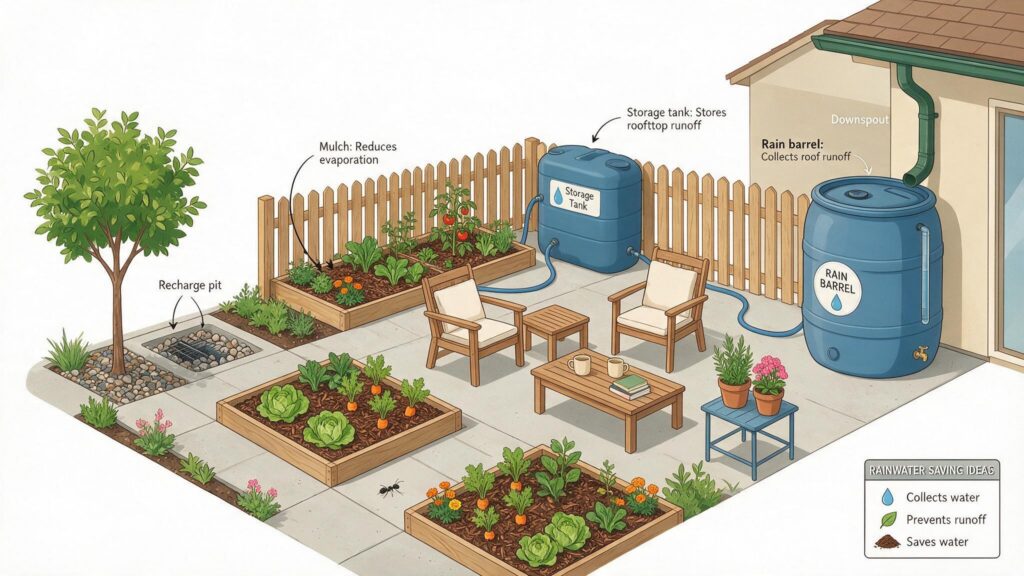
The simplest starting point: a barrel or drum placed under an existing downpipe, catching water that would otherwise run straight into a stormwater drain. It won’t handle a whole roof’s output, but it’s enough for garden watering and doesn’t need any plumbing changes.
2. Mulch Garden Beds
Mulch slows evaporation from soil and helps rain that does fall stay in the ground longer instead of running off or drying out within a day. It’s a low-cost habit that makes every bit of rainfall, harvested or not, go further in a garden.
3. Direct Downpipes Toward Planted Areas
Where a full harvesting system isn’t feasible, simply redirecting a downpipe’s outlet toward a garden bed or lawn, instead of a paved driveway, lets that runoff soak into soil rather than running off the property entirely.
4. Fix Leaking Taps and Pipes
Not rainwater harvesting directly, but water conservation and rainwater harvesting work toward the same goal — and a leaking tap wastes far more water over a year than most people realize. Fixing leaks is the cheapest water-saving action available to almost any household.
5. Install a Terrace Storage Tank
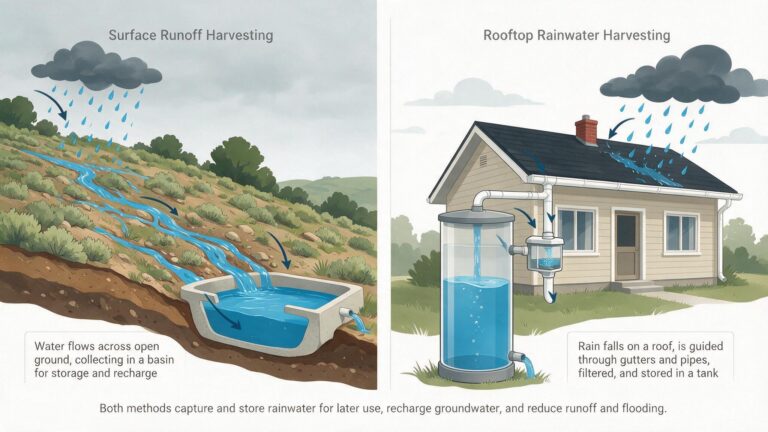
For a home with a flat or accessible roof, a properly sized storage tank fed by gutters and a first-flush diverter captures meaningfully more water than a barrel setup, and can supply gardening, washing, and flushing needs across a season.
6. Build a Recharge Pit Near a Tree or Garden Bed
A small recharge pit, even a modest one, sends excess rainwater into the ground near where it’s dug rather than letting it run off the property. Placing it near existing trees or garden beds means the recharge also benefits root systems directly.
7. Use a First-Flush Diverter on Any Collection System
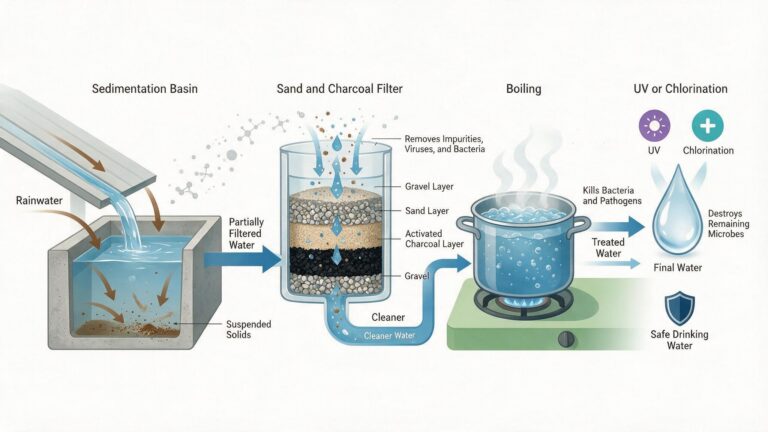
If water is being collected for any use beyond immediate garden watering, a first-flush diverter is worth adding even to a simple barrel setup — it meaningfully improves what’s actually collected by discarding the dirtiest initial flow of each rainfall.
8. Choose Permeable Paving Where Possible
Driveways and paths paved with permeable materials let rain soak through to the ground beneath, rather than running off entirely the way solid concrete or asphalt does — a design choice worth considering at the point of construction or renovation.
9. Reuse Greywater Alongside Harvested Rainwater
Household greywater — from washing or bathing — can supplement harvested rainwater for non-potable uses like garden irrigation, stretching the value of whatever rainwater has already been captured.
10. Get a Proper Site Assessment for a Full System
Every step above helps, but the biggest jump in actual water saved comes from a properly designed system — sized to catchment area and calculated harvesting potential, rather than assembled piecemeal. Our guide to the rainwater harvesting process covers what that assessment actually involves.
Starting Small vs. Going All In
These ten don’t need to happen all at once. A rain barrel and mulched beds this month, a proper storage tank and recharge pit next year — incremental water saving adds up, and starting with the low-cost habits is a reasonable way to build toward a full system without a large upfront commitment.
Frequently Asked Questions
Which of these ten makes the biggest difference?
A properly sized storage tank paired with a recharge structure, by a wide margin — the habit-based changes matter, but they capture a fraction of what a designed system does.
Can these be done without professional help?
A rain barrel, mulching, and downpipe redirection are all DIY-friendly. A properly sized storage tank, recharge pit, or any system meant to meet compliance requirements is worth having professionally assessed and installed.
Do these methods work in a low-rainfall area?
Yes — even modest rainfall adds up meaningfully when captured consistently, though the design should lean more toward maximizing what’s captured (bigger catchment relative to need) than it might in a higher-rainfall region.