Short answer: not safely, not straight from a basic rooftop catchment system. Longer answer: it depends entirely on what treatment the water has gone through before it reaches you, and most residential rainwater harvesting systems in India aren’t built with that treatment included by default.
Why Basic Harvested Rainwater Isn’t Drinking-Safe
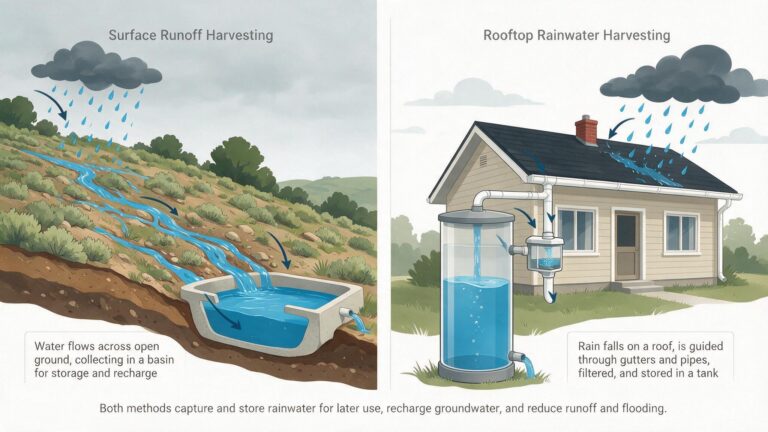
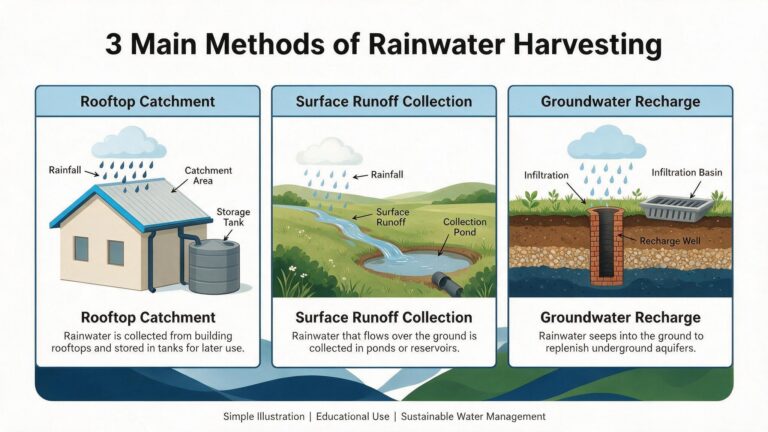
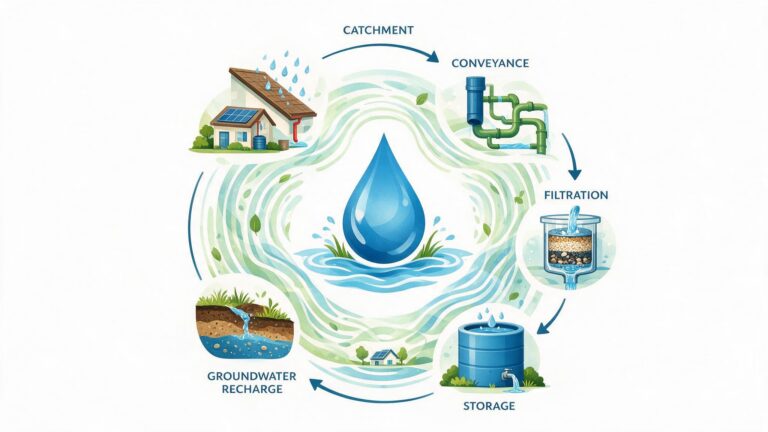
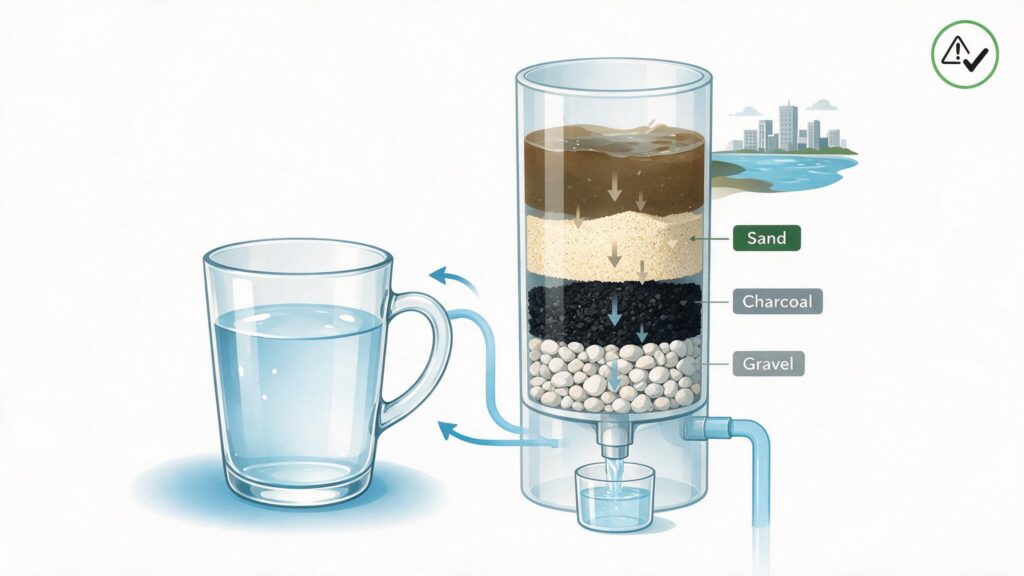
A standard rooftop system — gutters, first-flush diverter, a sand or charcoal filter, storage tank — removes visible debris and suspended particles, but it doesn’t reliably eliminate bacteria, viruses, or dissolved contaminants that can be present in roof runoff. Bird droppings, dust, and airborne pollutants that settle on a roof between rainfalls are the main sources of concern, and basic filtration reduces but doesn’t eliminate the risk they carry.
What It Takes to Make Rainwater Drinking-Safe
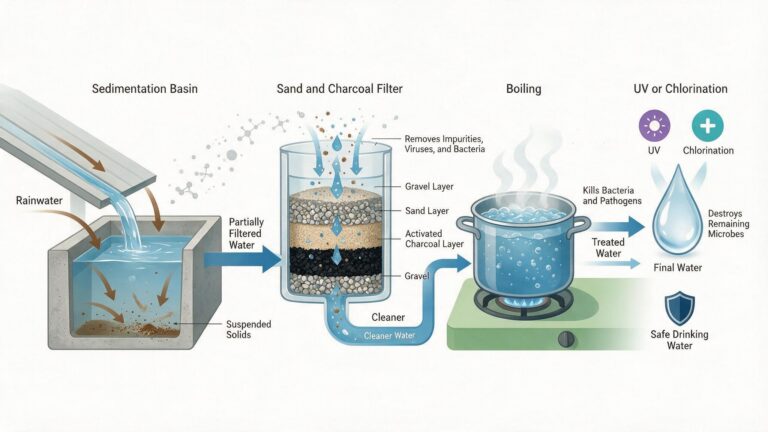
Getting from “filtered” to “safe to drink” requires an additional treatment step beyond what most systems include:
- UV disinfection — passes water under ultraviolet light to neutralize bacteria and viruses without adding chemicals.
- Chlorination — a small, controlled dose of chlorine disinfects stored water, similar to standard municipal water treatment.
- Boiling — the simplest option for occasional use, though impractical as a standing treatment method for a household’s daily drinking supply.
- Multi-stage filtration with a fine or reverse-osmosis final stage — removes finer contaminants that a standard sand or charcoal filter won’t catch.
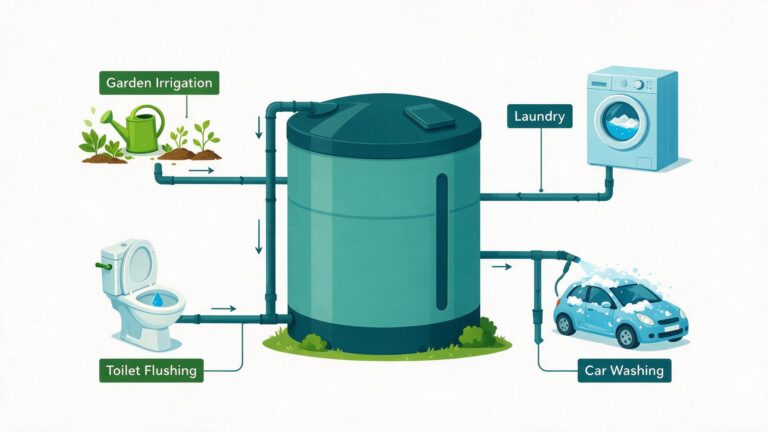
Most residential systems in Nagpur and across India are designed for non-potable use — washing, gardening, flushing — specifically because adding one of these treatment steps increases cost and maintenance requirements that aren’t necessary unless drinking water is a specific goal of the system.
When It Makes Sense to Treat for Drinking Water
Adding drinking-water treatment to a rainwater harvesting system makes the most sense where municipal water supply is unreliable or absent, or as a backup source for genuine emergencies. For most urban homes with an existing municipal or borewell connection, harvested rainwater covering non-potable uses — and freeing up municipal or borewell water for drinking — is usually the more practical division of use.
A Reasonable Middle Ground
Even without full drinking-water treatment, harvested rainwater is entirely appropriate for washing, gardening, flushing, and general household use — which is the majority of a typical household’s water consumption in the first place. Reserving the drinking-water portion for a treated municipal or borewell source, while using harvested rainwater for everything else, captures most of the practical benefit without the added cost of a full potability treatment train.
Going Further
For the specific filtration and disinfection stages involved, see our guide on how to purify rainwater, and for how long stored rainwater stays safe to use, see how long rainwater can be stored.
Frequently Asked Questions
Is boiled rainwater completely safe to drink?
Boiling kills bacteria and viruses effectively, but it doesn’t remove dissolved chemical contaminants or sediment that may be present, so it’s a reasonable occasional measure rather than a complete solution for ongoing daily use.
Does a self-cleaning filter make rainwater drinkable?
No — a self-cleaning mesh filter, like most standard filters, is designed to remove suspended particles and debris, not to disinfect water at the microbial level. A separate disinfection step is still needed for drinking-safe water.
How can I reuse rainwater safely if I’m not drinking it?
See our guide on how to reuse rainwater for the specific non-potable uses harvested rainwater is well suited to, with no additional treatment required beyond standard filtration.