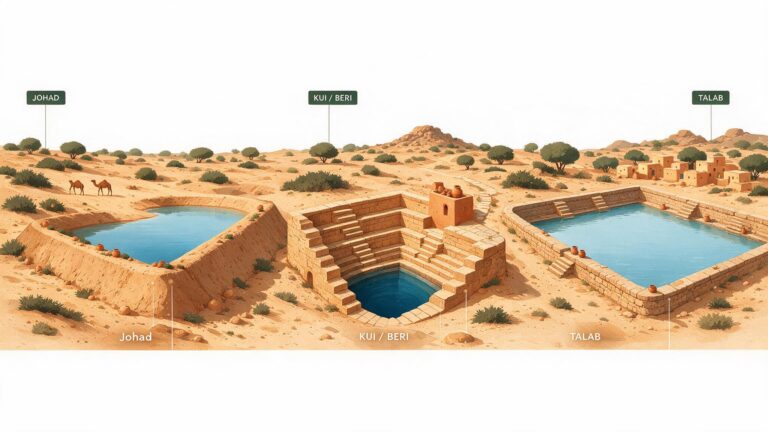
Search for “methods of rainwater harvesting” and you’ll find sources describing two methods, three methods, and seven types — all in the same breath, often on the same page. That’s not an error. It’s three different levels of detail applied to the same subject. We’ve covered the seven specific types and the two broad categories separately. This one covers the middle ground: the three-method framing you’ll most often see in Indian textbooks, government guidelines, and NGO water-conservation material.
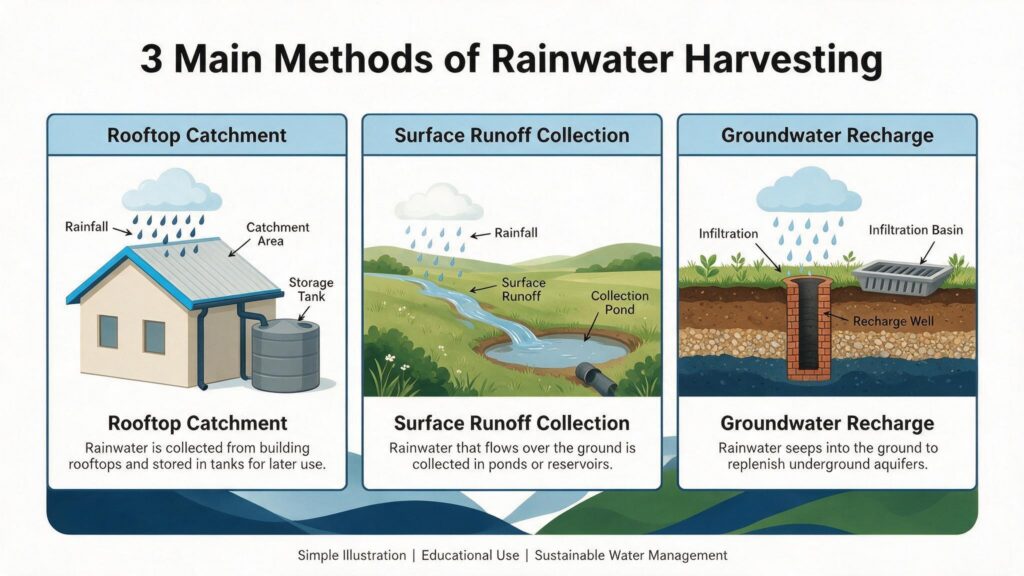
The three-method classification groups rainwater harvesting by what the water is being collected for, rather than by the physical structure used to collect it. That distinction matters, because it’s the one that actually drives a design decision.
Method 1: Rooftop Rainwater Harvesting for Storage
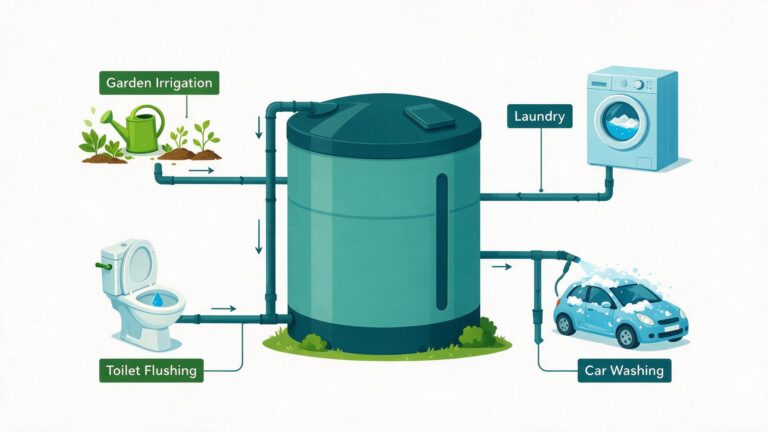
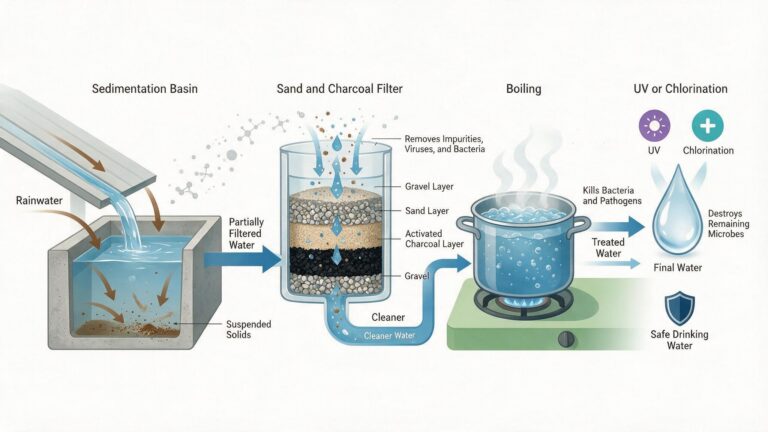
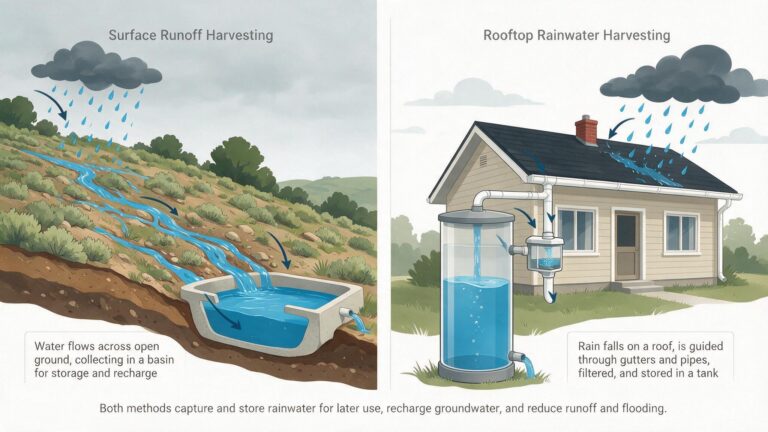
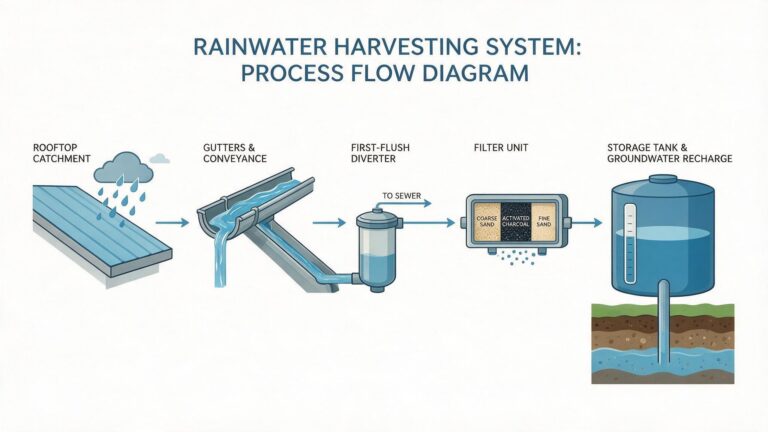
Rain that falls on a roof is channelled through gutters and a downpipe, filtered, and delivered to a storage tank for direct use — washing, gardening, flushing, and sometimes drinking water after treatment. This method is defined by its purpose: the water is meant to be used, not sent back into the ground. It’s the most visible method to a homeowner, since the tank is something you can see and draw water from directly.
Method 2: Surface Runoff Harvesting for Collection
Where rooftop harvesting depends on a building, surface runoff harvesting works off open ground — courtyards, compounds, unpaved plots, or roads. Rainwater is channelled by shallow drains toward a collection point, typically feeding a larger structure like a percolation tank rather than a domestic storage tank. This method is common where the available catchment outside a building is larger, or more consistent, than the roof itself — institutional campuses and factories are the usual examples.
Method 3: Groundwater Recharge
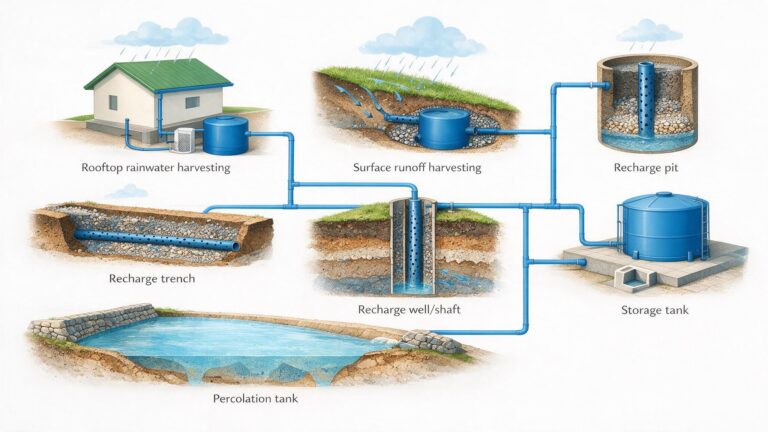
This is the method that defines its own purpose in its name: rather than storing water for use, the goal is to put it back into the aquifer. It’s carried out through recharge pits, recharge trenches, or recharge wells — whichever structure fits the site’s open space and depth to groundwater — and it’s usually the method municipal byelaws are actually trying to encourage when they mandate rainwater harvesting, because falling water tables are a shared civic problem in a way that one household’s water bill isn’t.
How the Three Methods Actually Work Together
In practice, almost no functioning system uses just one of these three methods in isolation. A typical residential setup in Nagpur combines rooftop catchment (Method 1) with a storage tank sized for the household’s needs, and routes the overflow — whatever the tank can’t hold — into a recharge pit or trench (Method 3). Surface runoff harvesting (Method 2) tends to be added on larger plots where paved courtyard or compound area is significant enough to be worth capturing on its own, on top of the roof.
If you’re trying to work out which structures actually fit these three methods on your property, our guide to the seven types of rainwater harvesting goes into the specific dimensions and use cases for each one, and the step-by-step process guide covers how the site gets assessed to make that call.
Frequently Asked Questions
Is this the same as the “2 methods” classification?
Not quite. The two-method split is rooftop vs. surface runoff — based purely on where the water is caught. This three-method version adds groundwater recharge as its own category because it’s defined by purpose (what happens to the water) rather than catchment surface, which is why recharge shows up separately here even though it can technically follow from either rooftop or surface catchment.
Which of the three methods is required by Indian building codes?
Most municipal rainwater harvesting byelaws, including Nagpur’s, focus on rooftop harvesting paired with a recharge structure — effectively Methods 1 and 3 together. Surface runoff harvesting is rarely mandated for individual residential plots, since it depends on having significant open catchment beyond the building footprint.
Can groundwater recharge happen without a storage tank at all?
Yes — a system can be built purely for recharge, with rooftop catchment feeding a recharge pit or well directly and no storage tank in the design at all. This is common on smaller plots where there’s no real use case for stored water, but compliance still requires a recharge structure.