Once rainwater is collected and filtered, the question shifts from “how do I harvest it” to “what do I actually do with it.” Here’s a practical breakdown of where harvested rainwater fits into everyday household and property use.
Garden and Landscape Irrigation
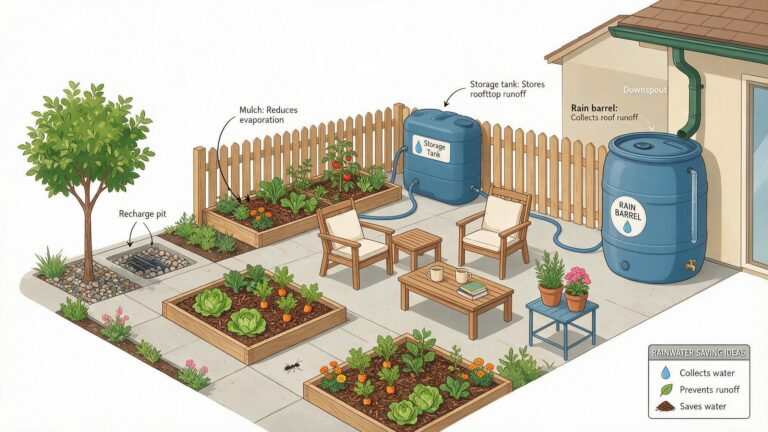
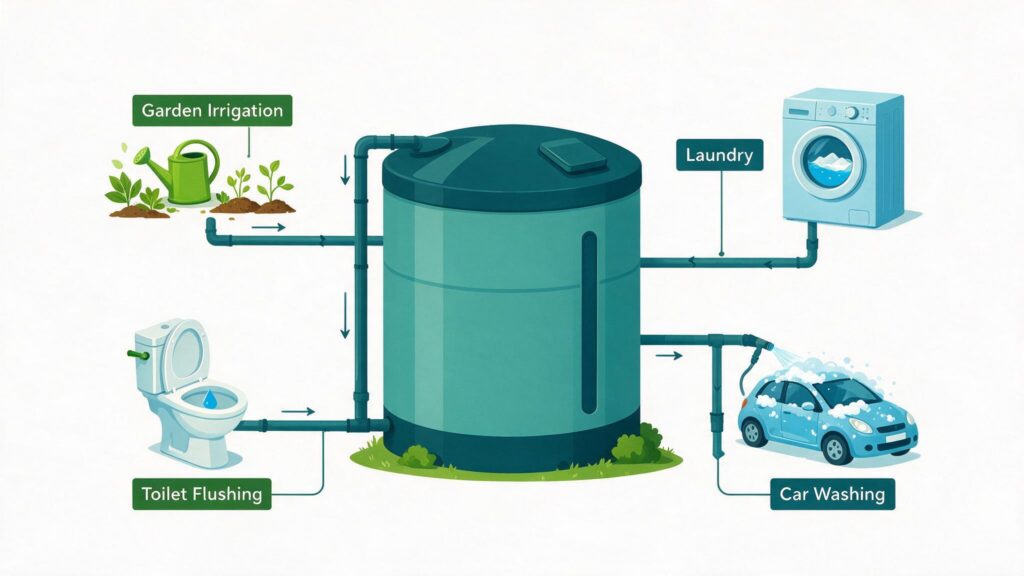
This is the single most common reuse of harvested rainwater, and for good reason — most plants tolerate untreated rainwater perfectly well, and it’s typically softer (lower in dissolved minerals) than municipal or borewell water, which many garden plants actually prefer over hard water.
Washing and Cleaning
Washing floors, vehicles, and outdoor areas doesn’t require drinking-water quality, making it a natural use for filtered but undisinfected harvested rainwater. The softer mineral content is a genuine practical advantage here too — less scale buildup on surfaces compared to hard municipal or borewell water in many parts of Maharashtra.
Laundry
Rainwater’s low mineral content means less soap is needed to get a good lather compared to hard water, and clothes generally come out with less mineral residue. Some households route harvested rainwater specifically to a washing machine supply line for this reason.
Toilet Flushing
Flushing accounts for a meaningful share of a typical household’s total water use, and it has no water-quality requirement beyond basic filtration. Plumbing a dedicated line from a rainwater storage tank to toilet cisterns is one of the more impactful ways to reduce a household’s draw on municipal or borewell water.
Groundwater Recharge (Indirect Reuse)
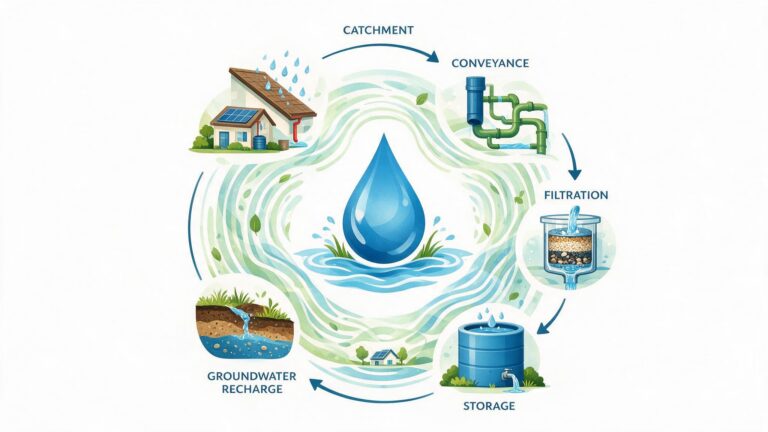
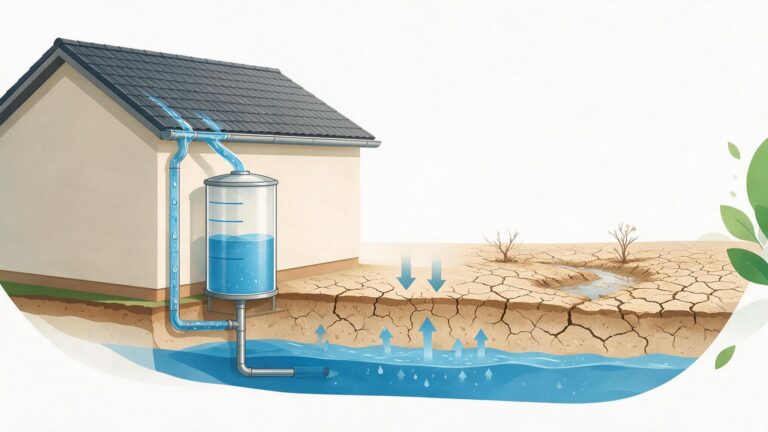
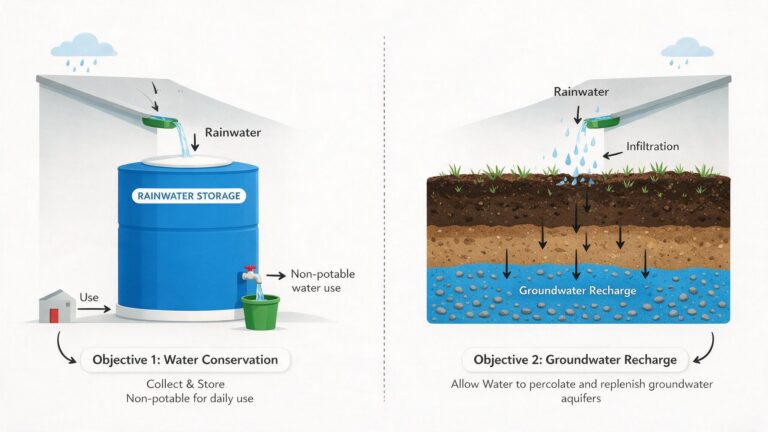
Not every use of harvested rainwater is direct — sending excess water into a recharge pit, trench, or well is itself a form of reuse, supporting the aquifer that a property’s own borewell, or a neighbour’s, ultimately draws from. See our guide to the two objectives of rainwater harvesting for how this fits alongside direct-use reuse.
Drinking Water (With Additional Treatment)
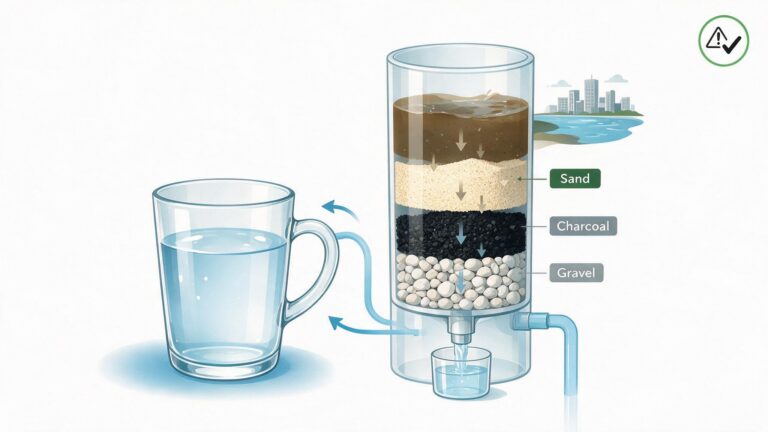
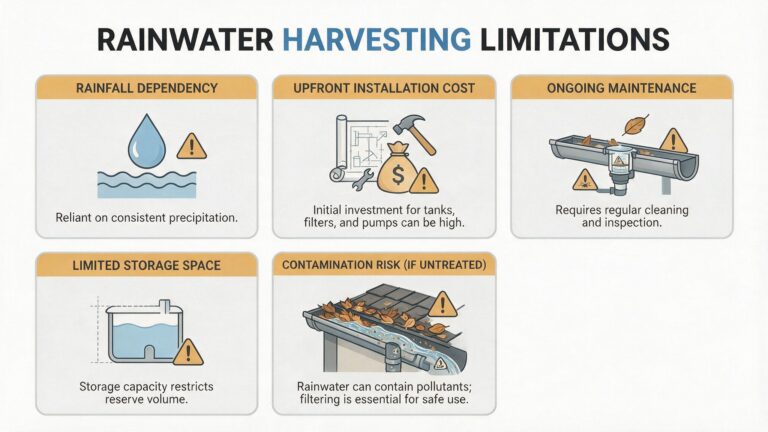
With disinfection added — UV, chlorination, or another treatment step — harvested rainwater can be used for drinking, though this requires more than the basic filtration most residential systems include. Our guide on whether you can drink rainwater directly covers what that additional step involves and when it’s worth adding.
Designing a System Around Multiple Reuse Points
A system built around several reuse points at once — garden irrigation, washing, and toilet flushing, for instance — gets more value out of the same harvested volume than one built around a single use. This is a design decision worth raising during the site assessment stage, since plumbing multiple reuse points into a system is far easier to plan at installation than to retrofit later.
Frequently Asked Questions
Does harvested rainwater need any treatment before use in a garden?
Basic filtration to remove debris is sufficient for garden use; disinfection isn’t necessary since plants aren’t affected by the bacteria levels that would be a concern for drinking water.
Can rainwater damage a washing machine over time?
No — if anything, rainwater’s lower mineral content reduces the scale buildup that hard water causes in appliances over time, which is generally beneficial rather than harmful.
Is it worth plumbing rainwater directly to toilets, or is a bucket-fill approach enough?
A direct plumbed connection captures far more of the practical benefit for a household using significant water for flushing, though a simpler bucket-fill approach still works for smaller-scale reuse without the plumbing investment.