There’s no single fixed number here — harvested rainwater can be stored anywhere from a week to effectively indefinitely, and the difference comes down almost entirely to how the tank is managed, not some inherent shelf life of the water itself. What actually determines how long stored rainwater stays usable is light exposure, mosquito control, and the tank material itself.
Why Light Exposure Is the Biggest Factor
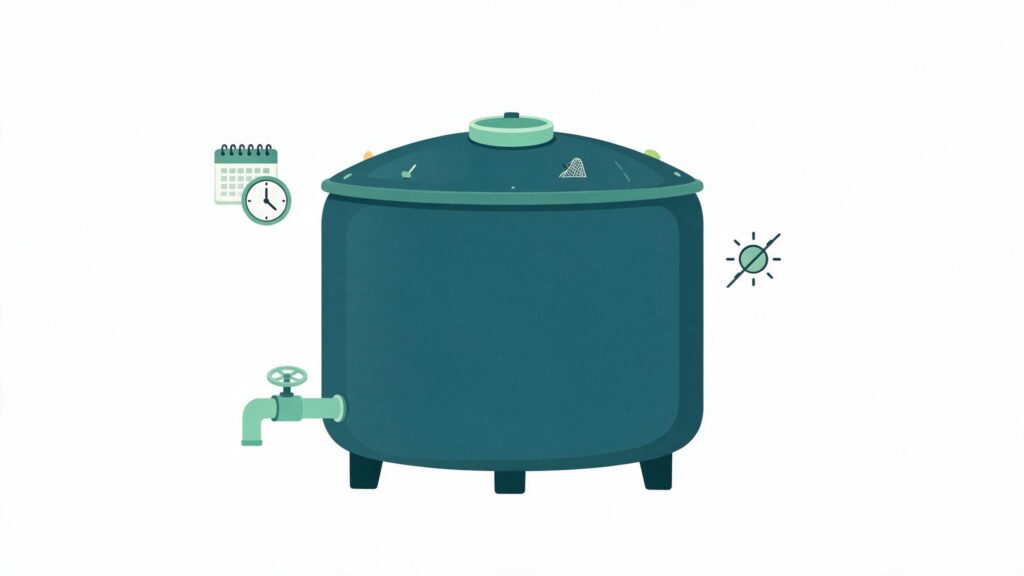
Algae needs light to grow, and a tank that lets light in — a clear or translucent material, or water stored in an open, sun-exposed container — will develop algae far faster than one that doesn’t. This is why properly designed storage tanks are opaque, and why underground or shaded tanks generally hold water in better condition for longer than an above-ground tank sitting in direct sun. If a tank is already letting light through, painting it a dark colour or relocating it to shade meaningfully extends how long the water inside stays clear.
Mosquito Control
Standing water is an obvious mosquito breeding ground if it’s left uncovered, which is why every properly designed storage tank includes a sealed or screened lid. This isn’t just a water-quality issue — it’s a public health one, and it’s typically the first thing checked in any tank that’s gone unmaintained for a while.
Tank Material
Storage tanks built from high-quality plastic, concrete, fibreglass, or steel hold water in better condition over time than lower-grade materials that can degrade or leach into the water. Concrete tanks have a specific advantage here — they tend to neutralize acidity in stored water rather than being affected by it, which is one reason RCC storage tanks remain common in Indian residential systems even where plastic alternatives are cheaper upfront.
Non-Potable vs. Drinking Use: Does Storage Time Differ?
For non-potable use — washing, gardening, flushing — a well-maintained tank (opaque, sealed, good material) can hold usable water for extended periods, often well beyond a single season, without meaningful quality loss. Water intended for drinking is a different standard entirely: even a well-maintained tank’s water needs disinfection before drinking regardless of how long it’s been stored, since the storage conditions that keep water “usable” for washing don’t address the bacterial and viral safety concerns that matter for drinking. See our guide on whether you can drink rainwater directly for what that additional step involves.
Signs a Stored Tank Needs Attention
Visible discolouration, a musty or off smell, or visible algae growth are all signs that a tank’s storage conditions have broken down — usually traceable to a light leak, a compromised seal, or a tank that’s overdue for cleaning. None of these are a reason to abandon the system; they’re a maintenance signal, covered in more detail in our maintenance guide.
Frequently Asked Questions
Does adding chlorine extend how long rainwater can be stored?
Yes — a small, controlled dose of chlorine or iodine inhibits algae growth and reduces waterborne pathogens, extending how long stored water stays in good condition, though it moves the water toward treated rather than untreated status.
Is there a maximum recommended storage time even under ideal conditions?
There’s no universally agreed maximum — a well-sealed, opaque, good-material tank can hold usable non-potable water for a very long time. In practice, most residential tanks cycle through water within a season anyway, since the tank is being drawn down and refilled regularly rather than sitting static.
Does an underground tank store water longer than an above-ground one?
Generally yes, since underground placement naturally limits light exposure and keeps the water cooler, both of which slow algae growth compared to an above-ground tank in direct sun.