Most lists of rainwater harvesting advantages read like a brochure — vague claims about sustainability with no specifics. Here’s a more grounded version: ten actual benefits, what each one means in practice, and where the benefit is strongest.
1. Reduces Dependence on Municipal Water Supply
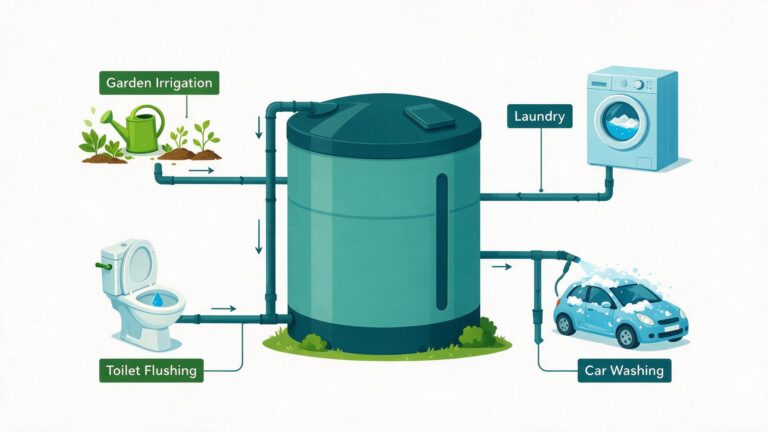
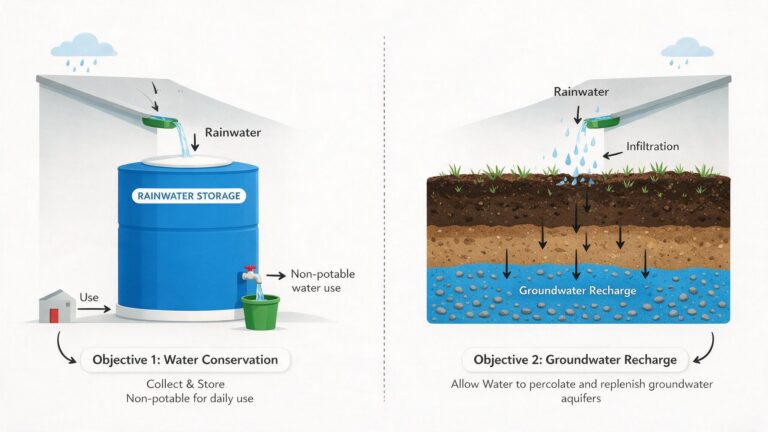
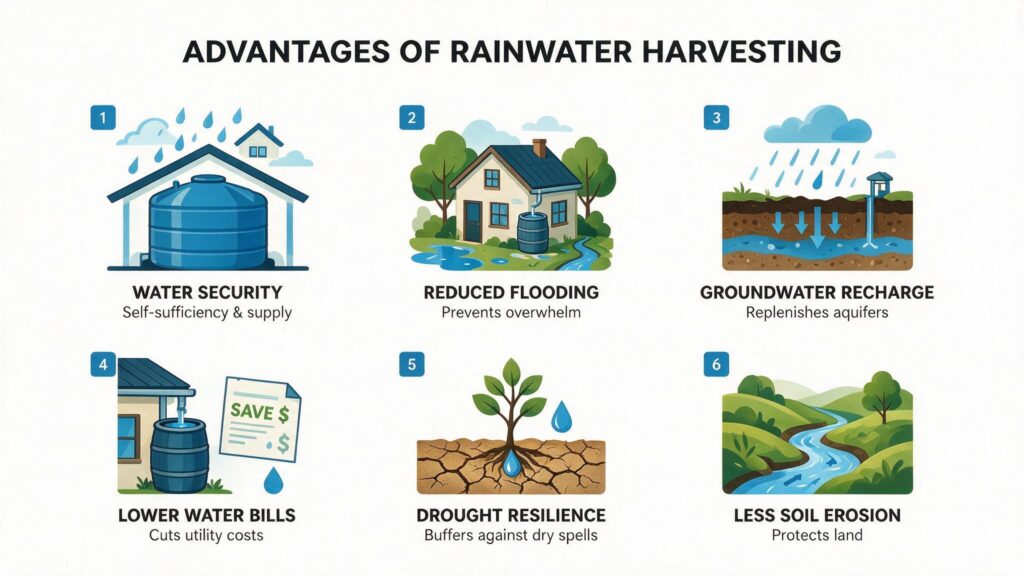
Harvested rainwater used for gardening, washing, and flushing directly offsets demand that would otherwise come from a municipal connection or tanker supply — a meaningful saving over a full monsoon season, especially for households with a garden or a larger property.
2. Recharges Groundwater
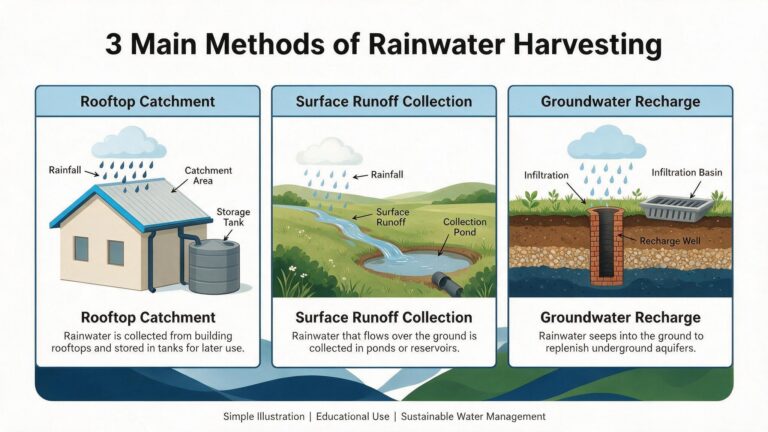
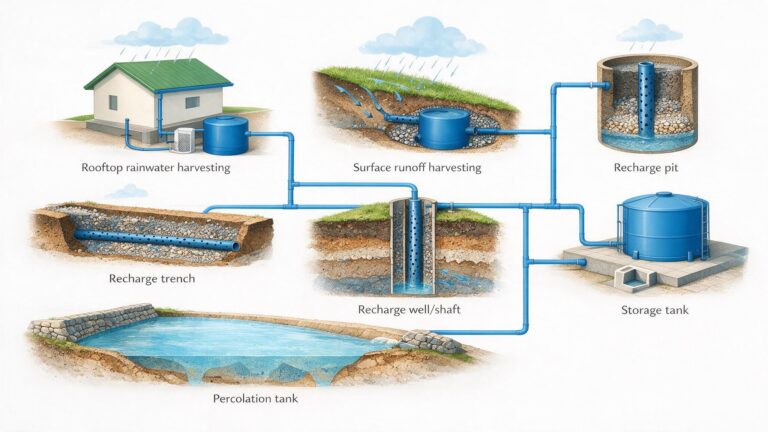
Water directed into a recharge pit, trench, or well replenishes the local aquifer instead of running off into stormwater drains. This is the benefit municipal byelaws are usually built around, because falling water tables are a shared problem across an entire area, not just one property’s concern.
3. Reduces Local Flooding and Waterlogging
Every litre of rain captured and directed into the ground or a tank is a litre that doesn’t add to surface runoff during a heavy downpour. At scale — a housing society or an entire neighbourhood with widespread rainwater harvesting — this measurably reduces the load on stormwater drainage during intense rainfall.
4. Improves Borewell Yield and Longevity
A borewell drawing from a recharge-supported aquifer tends to maintain water levels better over time than one in an area with no recharge, since the extraction is being at least partially offset. This is one of the more direct, practical benefits for a property that relies on its own borewell.
5. Provides a Backup Water Source
Stored rainwater is available during municipal supply interruptions or peak summer shortages, when demand on the public network is highest and supply is least reliable.
6. Requires No Ongoing Energy Cost to Collect
Unlike pumped water, gravity does the work of moving rain from roof to storage or recharge structure. There’s no electricity cost associated with the collection itself, only with distribution if the stored water is pumped for use afterward.
7. Reduces Soil Erosion
Uncontrolled surface runoff carries topsoil with it as it flows, particularly on sloped or unpaved ground. Capturing and slowing that runoff at the source reduces the erosion that would otherwise occur.
8. Lowers Long-Term Water Costs
For properties on metered or tanker-supplied water, offsetting even a portion of demand through harvested rainwater reduces the recurring cost of water over the system’s working life, which is typically measured in years, not months.
9. Supports Regulatory Compliance
In areas where rainwater harvesting is mandated by municipal byelaws — which includes most of urban Maharashtra above a certain plot size — a properly built system is also what keeps a building plan approvable and a water connection active. See our guide on whether rainwater harvesting is mandatory in Nagpur for the specific thresholds.
10. Improves Water Quality Reaching the Aquifer
Filtered rainwater recharge, done correctly, sends cleaner water into the ground than unfiltered surface runoff would — a benefit that’s easy to overlook but genuinely matters for long-term groundwater quality in an area with many recharge structures operating at once.
The Honest Counterpoint
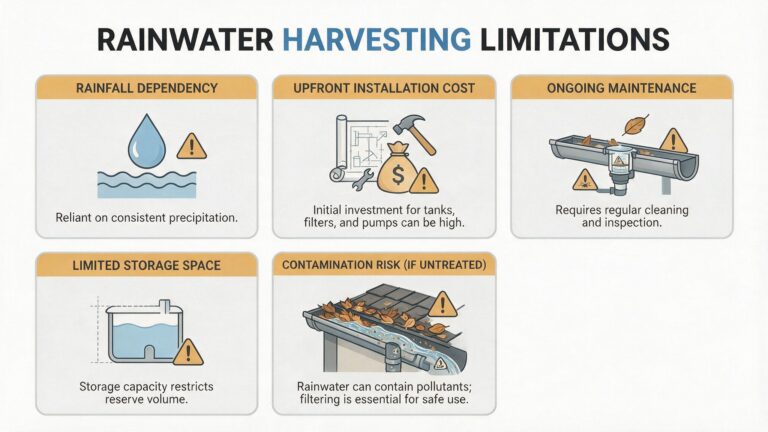
None of these benefits are automatic — they depend on the system being properly designed, filtered, and maintained. A system with no first-flush diverter or a clogged filter delivers a fraction of these benefits, which is exactly why the process and principles behind a system matter as much as the decision to build one at all. For the limitations worth knowing about before installing, see our guide to the disadvantages of rainwater harvesting.
The Bigger Picture
For the bigger picture on why these advantages matter at a regional level, see our guide on the importance of rainwater harvesting, and if you’re wondering about the legal side specifically, see whether rainwater harvesting is illegal in India (it isn’t).
Frequently Asked Questions
Which advantage has the fastest payback for a homeowner?
Reduced dependence on municipal or tanker water tends to show up fastest in a household’s own experience, since it’s the benefit most directly tied to a monthly water bill or tanker order.
Do these advantages apply equally to commercial and residential properties?
The underlying benefits are the same, but they scale with catchment area and water use — a large commercial property with significant roof area typically sees a bigger absolute benefit than a small residential plot, even though the percentage impact can go either way.
How long does it take to see these benefits after installation?
Groundwater recharge and reduced flooding benefits typically show up gradually over multiple monsoon seasons, while backup water availability and reduced water bills are noticeable from the first working monsoon.