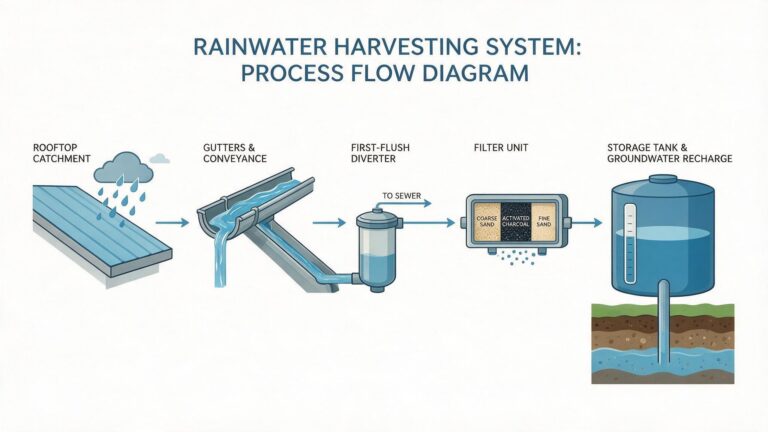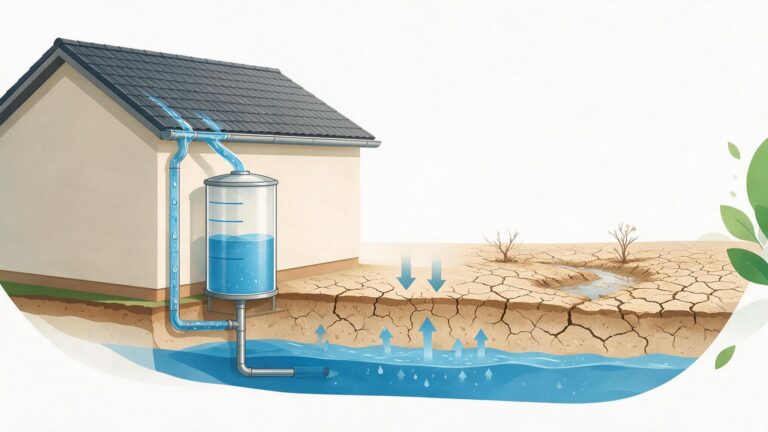
Rainwater harvesting gets promoted heavily, and for good reason — but a fair picture includes the real limitations, not just the benefits. Here’s what actually holds a system back in practice, honestly assessed rather than dismissed.
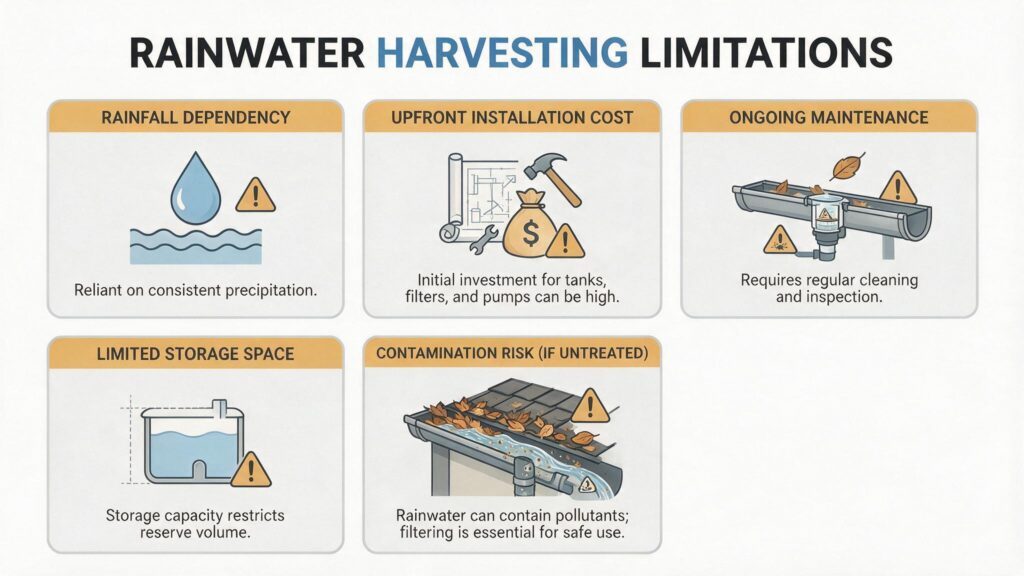
1. Depends Entirely on Rainfall
A rainwater harvesting system is only as reliable as the rainfall pattern it’s built around. In a low-rainfall year, or during an extended dry spell, harvested volume drops accordingly — there’s no getting around the fact that this is a supplementary water source tied to weather, not a guaranteed one.
2. Requires Upfront Investment
Gutters, filters, a storage tank or recharge structure, and installation labour all carry a real cost. For a household weighing whether the investment makes sense, our rainwater harvesting cost guide breaks down what actually drives the price in Nagpur and Maharashtra.
3. Needs Ongoing Maintenance
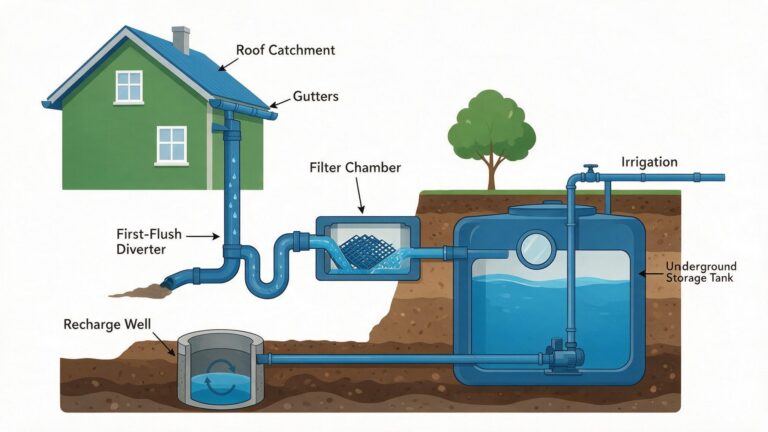
A system isn’t a one-time build. Filters need periodic cleaning, first-flush diverters need resetting before each monsoon, and storage tanks need checking for silt buildup. A neglected system doesn’t fail outright, but it does underperform — a clogged filter or a full first-flush chamber quietly reduces how much of the benefit a household actually gets.
4. Limited Storage Space in Urban Properties
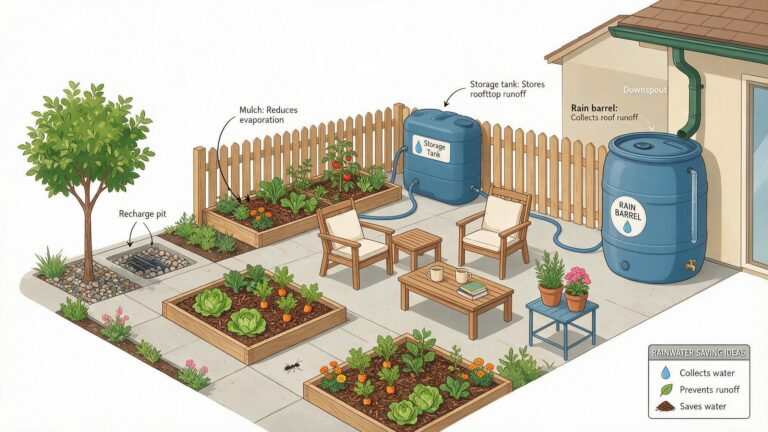
Not every urban plot has room for a tank sized to its full harvesting potential, particularly in dense residential areas. This often means a system captures less than the property’s theoretical maximum, simply because there’s nowhere to put a bigger tank.
5. Contamination Risk if Poorly Filtered
Water collected from a roof or open ground carries dust, bird droppings, and airborne pollutants. Without proper first-flush diversion and filtration, that contamination reaches storage or, worse, gets sent directly into a recharge structure and the groundwater below it — which is exactly why filtration isn’t an optional add-on in a well-designed system.
6. Not a Standalone Solution for Drinking Water
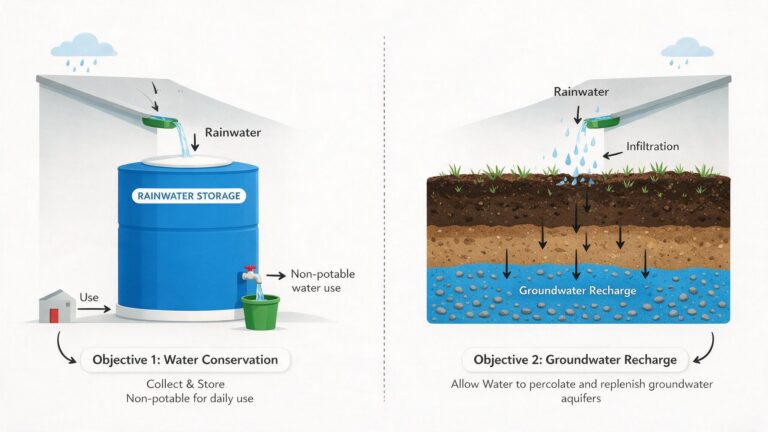
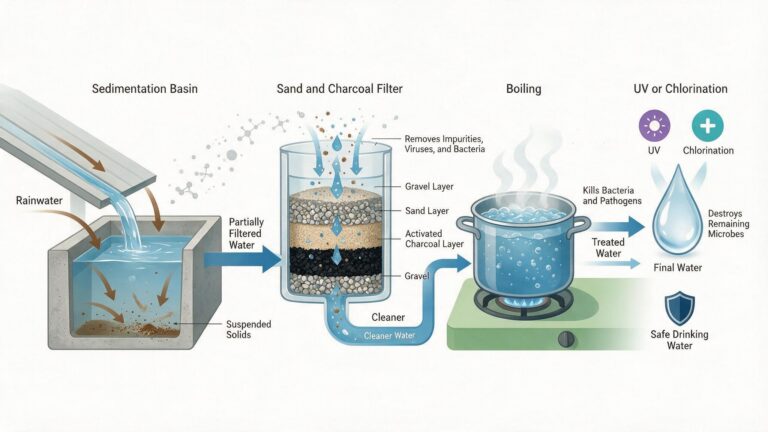
Basic roof-catchment filtration makes water suitable for washing, gardening, and flushing, but not for drinking without additional treatment — typically UV disinfection or a dedicated purification step that most residential systems don’t include by default. See our guide on whether you can drink rainwater directly for what that additional step actually involves.
7. Site-Specific Constraints Can Limit Design
Not every property has soil conditions or open space that suit every structure type. Dense clay soil, a high water table, or a small plot can all rule out certain recharge designs, which sometimes means the ideal system on paper isn’t the one that’s actually buildable on a given site.
8. Requires Periodic Desilting of Recharge Structures
Recharge pits, trenches, and wells gradually accumulate silt even with filtration in place, and their percolation rate slows as a result. Left unaddressed for years, a recharge structure can lose most of its effectiveness — this is a maintenance cost that’s easy to forget about because, unlike a leaking tank, it doesn’t announce itself.
Weighing These Against the Benefits
None of these limitations argue against rainwater harvesting — they argue for building and maintaining a system properly rather than treating it as a set-and-forget installation. Every limitation on this list is manageable with correct design and upkeep, which is covered in our guides to the rainwater harvesting process and the advantages that make it worth doing anyway.
Why It’s Still Worth Doing
Despite these limitations, see our guide on the importance of rainwater harvesting for why it remains worth doing properly rather than not at all.
Frequently Asked Questions
Do these disadvantages mean rainwater harvesting isn’t worth it?
No — they’re the reasons a system needs to be properly designed and maintained, not reasons to skip it. The advantages, particularly groundwater recharge and reduced dependence on municipal supply, generally outweigh these limitations over the system’s working life.
Which disadvantage causes the most real-world problems?
Poor or neglected filtration, by a wide margin — it’s the root cause behind contaminated storage tanks, clogged recharge structures, and most of the “rainwater harvesting doesn’t work” complaints that actually trace back to inadequate maintenance rather than a flaw in the concept itself.
Can the upfront cost disadvantage be reduced?
Yes, to some extent — several Indian municipalities offer property tax rebates for compliant rainwater harvesting installations, which offsets part of the upfront cost over time. Availability and rebate size vary by city and byelaw.